Justice Darrell V. McGraw
passed away Saturday, December 7, 2024.
A former Chief Justice of the West Virginia State Supreme Court and also the West Virginia Attorney General for 20 years, Justice McGraw was instrumental in my early film career, along with his brother Warren who passed away last year. They were the subjects of my first film – “If Elected…” (1973), allowing a 24-year-old aspiring filmmaker to shoot a cinema verité classic.
In 2004, I returned to West Virginia and the McGraws to make “The Last Campaign” about Warren’s and Darrell’s re-election campaigns respectively for Supreme Court (Warren) and Attorney General (Darrell). Nominated for Best Documentary Feature of the year by the IDA and honored by the Academy of Motion Picture Arts and Sciences as one of the Best Documentary Features of 2005, “The Last Campaign” also won Best Film at the 2005 West Virginia Film Festival.
The McGraw brothers were politicians who believed fervently in serving the people of West Virginia, but in the end were defeated by the forces of corporate greed, as you can see if you watch “The Last Campaign” with the link below or purchase a DVD on this site.

Darrell & Warren McGraw in "The Last Campaign" (2004)


Wayne Ewing filming "If Elected..." (1972)

Streaming on

AUGUST 19, 2024
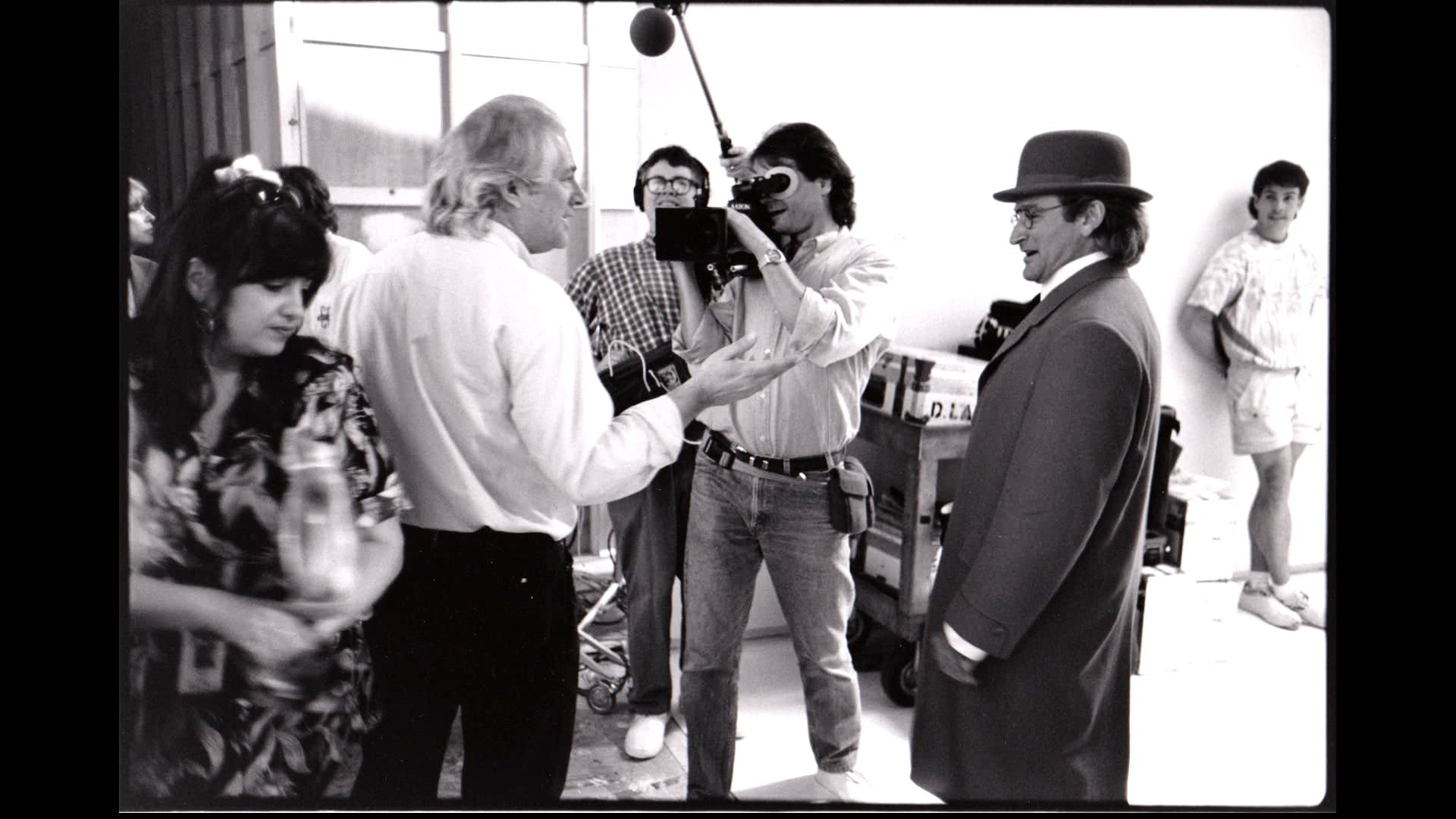
Wayne Ewing’s innovative cinematography and directing techniques were noted and praised by the critics. See the video clip below to learn how he created it.
What the critics said:
Tom Shales, Washington Post – 1/30/93
“The visual style of “Homicide” is striking too; it has the edginess but not the grubbiness of “Hill Street,” with Wayne Ewing’s hand-held camera work bringing you into the midst of the action as if he were “covering” a story as much as telling one. Abrupt editing adds to the gritty authenticity.”
American Cinematographer – 5/93
“Levinson and Ewing experimented with jump cutting the documentary footage and then shot tests with actors to explore and refine the style, which Ewing characterizes as “cinema verite’ that knows where it’s going, although he admits that he is never sure where he will end up when the scene is over. The actors love the technique, comparing it to dancing with the camera.”
Cine Outsider – 3/14/07
Their (Levinson and Fontana) masterstroke here was not to just try and emulate the documentary look, but to hire documentary director and cameraman Wayne Ewing (Free Lisl, Benched: The Corporate Takeover of the Judiciary, The Last Campaign) as director of photography. Ewing's contribution is crucial to Homicide's still-unique look and feel – the post-NYPD Blue twitchy camera technique that has become an almost obligatory component of film and television dramas has no place here, where the camerawork is as tight and fluid as it would be on a straight documentary. It adds an urgency and immediacy to dramatic scenes in a way that involves the audience as participants in the drama rather than as cinematically distanced observers…”
Philadelphia Inquirer 1/31/93
“The show is shot tightly with a single camera mounted on photography director Wayne Ewing’s shoulder. Ewing gets in the actors’ faces in ways never seen before on TV drama, proving that “talking heads” are anything but dull.”
Daily Variety – 1/29/93
“…excellent photography by Wayne Ewing…”
Sneak Peek...
In this clip from the 6th episode of “Polo Es Mi Vida”, Wayne explains how he created the look of Homicide that was widely imitated in dramatic television.